Co-Extruded WPC Decking vs Ordinary WPC | Durable Outdoor Flooring Solutions
Co-Extruded WPC Decking vs Ordinary WPC: Which Outdoor Flooring Performs Better in Real Projects?
When planning an outdoor decking project, especially for commercial, public, or long-term residential use, material choice plays a decisive role in durability, maintenance cost, and overall project lifespan. Among composite decking options, ordinary WPC decking and co-extruded WPC decking are often compared, yet many buyers underestimate how significant the performance gap becomes after years of real-world exposure.
This article explains the structural, functional, and project-level differences between co-extruded WPC decking and ordinary WPC decking, based on practical engineering applications rather than laboratory theory alone.
What Is Ordinary WPC Decking?
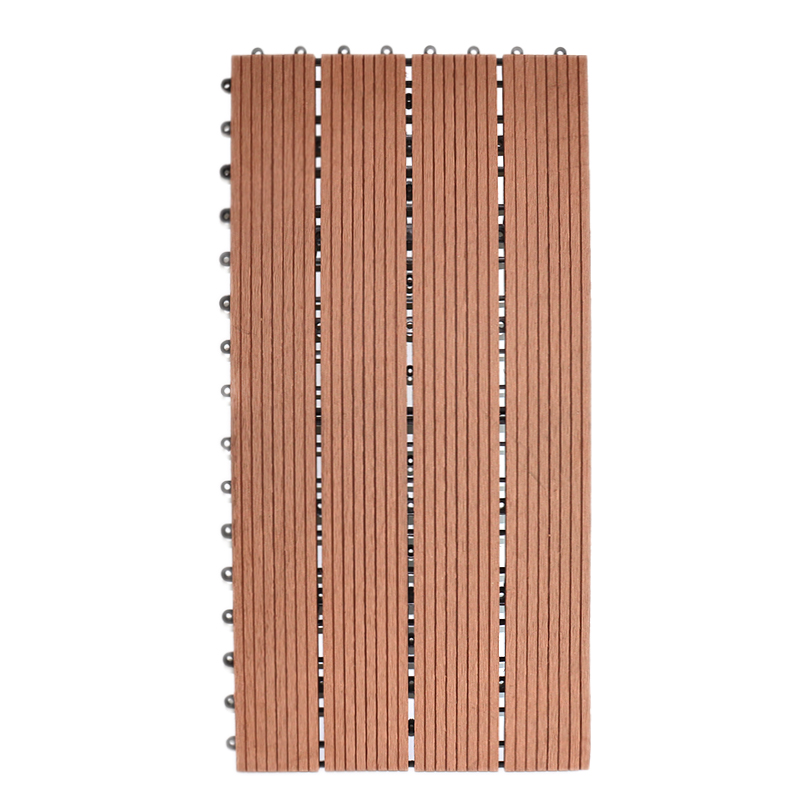
Ordinary WPC decking is made from a uniform mixture of wood fibers and plastic, extruded into boards with either hollow or solid cores. Its surface and internal structure are identical, meaning the material relies entirely on its internal formulation to resist moisture, UV radiation, and wear.
In early-stage outdoor projects—such as private balconies, garden paths, or temporary installations—ordinary WPC decking can perform adequately. However, in high-exposure environments, long-term performance challenges often emerge.
Common issues reported in outdoor projects include surface fading, water absorption at micro-cracks, oil stains penetration, and gradual fiber exposure after repeated weather cycles. These problems are especially noticeable in regions with strong sunlight, heavy rainfall, or freeze-thaw conditions.
What Makes Co-Extruded WPC Decking Different?
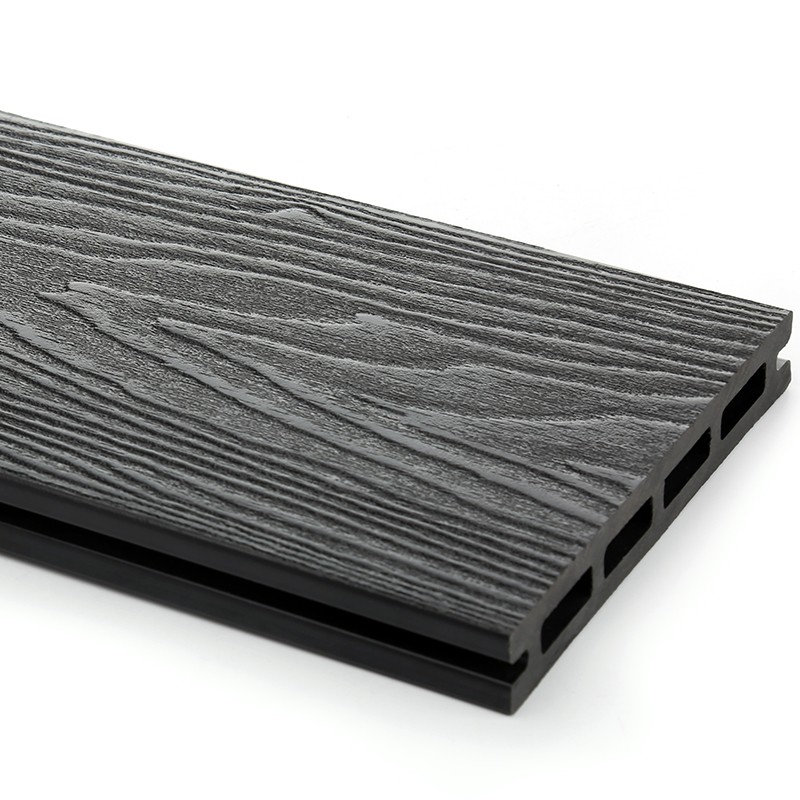
Co-extruded WPC decking uses a dual-layer structure:
- A high-density WPC core for structural strength
- An outer protective polymer shell co-extruded during production
This outer layer is not a surface coating—it is molecularly bonded to the core during extrusion. As a result, it acts as a permanent protective barrier against moisture, UV rays, stains, and surface abrasion.
In engineering projects such as waterfront walkways, hotel terraces, public parks, and school courtyards, this structural difference directly translates into longer service life and lower maintenance frequency.
Performance Comparison in Real Outdoor Conditions
In practical applications, the most obvious difference appears after 2–3 years of exposure.
Ordinary WPC decking gradually shows color fading, especially in darker tones like coffee, walnut, or teak. The surface may also become slightly rough as wood fibers are exposed. While this does not always compromise safety, it affects aesthetics and customer satisfaction—particularly in commercial or public projects.
Co-extruded WPC decking, by contrast, maintains color stability and surface smoothness. The protective shell prevents water penetration and resists staining from food, oil, wine, and leaf tannins, making it particularly suitable for outdoor dining areas, resorts, and high-traffic decks.
Maintenance Cost: A Key Factor for Commercial Projects
One of the most overlooked differences between these two materials is long-term maintenance cost.
Ordinary WPC decking may require periodic deep cleaning, surface restoration, or even partial board replacement in high-use areas. Over time, this increases labor and operational costs—something property managers and government buyers are increasingly sensitive to.
Co-extruded WPC decking significantly reduces these concerns. Routine cleaning with water is usually sufficient, and surface sealing or refinishing is unnecessary. For public infrastructure projects, this advantage often becomes a decisive factor during tender evaluations.
Structural Stability and Moisture Resistance
Moisture absorption is a critical issue for outdoor flooring systems. In ordinary WPC decking, prolonged exposure to moisture can lead to slight expansion, especially if installation gaps are not perfectly controlled.
Co-extruded WPC decking minimizes this risk. The outer shell isolates the core from moisture, ensuring better dimensional stability even in humid or coastal environments. This makes it a preferred option for marine decks, poolside platforms, and riverside walkways.
Aesthetic Options and Surface Texture
From a design perspective, co-extruded WPC decking offers more flexibility. Advanced embossing technologies allow for 3D deep-embossed wood grain, dual-color surfaces, and more natural textures that closely resemble hardwood.
Ordinary WPC decking typically relies on brushed or sanded finishes, which can lose definition over time. For projects where visual impact is important—such as commercial plazas or luxury residential developments—co-extruded decking delivers a more premium appearance throughout its lifecycle.
Which Should You Choose for Your Project?
If the project is budget-driven, short-term, or located in a mild climate, ordinary WPC decking can be a practical solution. However, for government projects, schools, hotels, parks, and long-term residential developments, co-extruded WPC decking offers superior value over time.
Lower maintenance, stronger weather resistance, and longer color retention make it an ideal solution for buyers who prioritize lifecycle performance rather than initial cost alone.
Conclusion: Long-Term Performance Matters More Than Initial Price
While ordinary WPC decking meets basic outdoor flooring needs, co-extruded WPC decking represents a more advanced solution engineered for demanding environments. In real projects, the difference becomes clear not in the first year—but in the years that follow.
Choosing co-extruded WPC decking means fewer complaints, lower maintenance costs, and a more stable, visually appealing outdoor space for years to come.