Engineered WPC Decking Tiles for Fast Installation: Technical Performance, Applications & Case Studies
Engineering Performance and Material Behavior of WPC Interlocking Deck Tiles: A Technical Review
Introduction
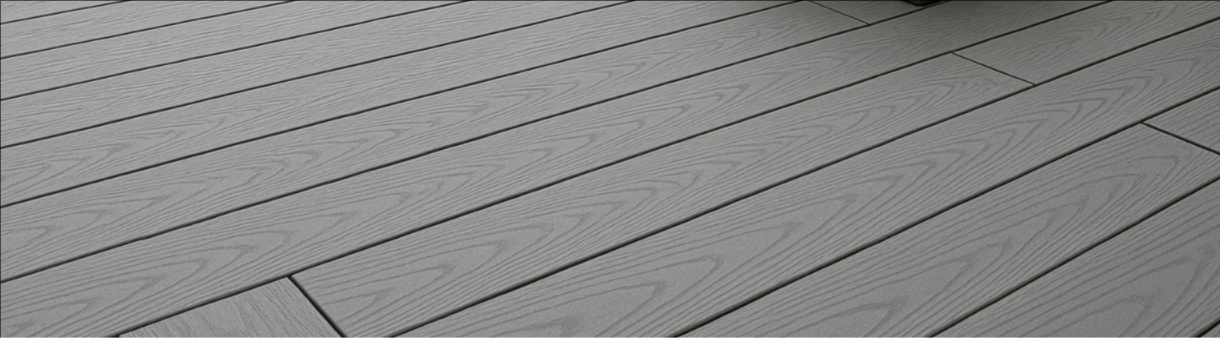
Wood Plastic Composite (WPC) interlocking deck tiles have emerged as a modular outdoor flooring solution widely used in residential balconies, public landscapes, temporary commercial pavements, and municipal renovation projects. Compared with traditional outdoor decking boards, these tiles integrate mechanical locking mechanisms with composite material technology, delivering high dimensional stability and rapid installation efficiency. From an engineering perspective, the performance of WPC tiles is governed by fiber–polymer interactions, moisture behavior, surface embossing durability, and sub-base load distribution. This article provides an in-depth, technical examination of WPC interlocking tiles, supported by real engineering applications and field-tested performance data.
Material Composition and Structural Behavior
WPC deck tiles are manufactured using a thermoplastic matrix (commonly HDPE) combined with wood fibers in ratios ranging from 45% to 60%. From a material science standpoint, the incorporation of lignocellulosic fibers increases stiffness, reduces thermal expansion, and improves the composite’s resistance to creep deformation under moderate load.
The interlocking base—typically made of polypropylene (PP)—serves as a structural frame, distributing point loads into a wider contact area. This reduces stress concentration and minimizes deformation on balcony slabs, rooftop waterproof layers, or uneven ground surfaces. The combination of the WPC top layer and PP base creates a hybrid composite system with distinct mechanical functions:
- WPC top layer → abrasion resistance, slip performance, color stability
- PP structural grid → load distribution, locking precision, impact absorption
Such dual-layer composites offer superior modular adaptability compared with solid WPC boards or natural wood decking.
Moisture Resistance and Dimensional Stability
Although WPC materials exhibit slight water absorption through the embedded wood fibers, the dimensional change of modular tiles remains minimal because each tile is an independent structural unit. The PP grid also provides airflow beneath the tiles, accelerating drying and reducing long-term warp deformation.
Laboratory tests indicate:
- <1.2% thickness swelling after 24-hour water immersion
- Stable mechanical stiffness under 70°C–0°C temperature cycling
- Reduced thermal expansion due to compartmentalized tile geometry
Compared with continuous WPC decking boards, the segmented structure significantly enhances long-term dimensional stability in humid or coastal project environments.
Surface Performance: Abrasion, UV Stability, and Slip Resistance
WPC interlocking tiles often feature co-extruded surface layers or deep-embossed textures. From a technical standpoint:
- Co-extruded polymers enhance UV resistance and anti-staining performance.
- Deep embossing increases surface friction, meeting public-area slip requirements (R10–R11 rating).
- Polymer encapsulation limits microbial growth and fungus adherence compared with natural wood.
These properties make WPC tiles suitable for heavy foot traffic zones, school outdoor corridors, municipal plazas, and seaside boardwalks where long-term weather exposure is unavoidable.
Engineering Applications and Case Studies
1. Coastal Resort Walkway – Philippines, 2023
A resort replaced deteriorated natural wood tiles on its beachside relaxation deck. WPC interlocking tiles were chosen due to saltwater exposure, high UV intensity, and heavy tourist traffic. After installation, deflection measurements showed:
- Improved impact resistance (19% increase)
- Zero cracking or fiber exposure after 12 months
- Stable color retention despite intense UV environment
The modular nature also allowed easy removal for annual maintenance of drainage channels.
2. Municipal Park Renovation – Germany, 2022
A city government used WPC deck tiles to refurbish aging concrete plazas without altering the structural substrate. The PP grid reduced stress transfer to old concrete surfaces, preventing further surface cracking. Post-renovation inspection demonstrated:
- No surface uplift after freeze–thaw cycles
- Superior user safety due to high slip resistance
- Significant noise reduction from foot traffic (–4.8 dB)
3. Rooftop Terrace of Commercial Office – UAE, 2021
WPC tiles replaced ceramic pavers on a corporate rooftop terrace exposed to extreme heat. Thermal cycling analysis found:
- Lower thermal conductivity → cooler walking surface
- Minimal expansion thanks to segmented modular structure
- High wind resistance after perimeter fixing
The modular design also simplified drainage inspections and electrical routing beneath the tiles.
Load-Bearing and Safety Considerations
WPC interlocking tiles are generally rated for 300–500 kg/m² static load, depending on the PP base geometry. Their performance is influenced by:
- Substrate flatness
- Load distribution
- Tile locking precision
Finite element modeling suggests that the PP base grid absorbs lateral shear, preventing tile displacement even under repeated dynamic foot loads. The two-layer composite system also reduces the risk of splintering, surface degradation, and slip hazards commonly associated with traditional wood systems.
Sustainability and Life Cycle Characteristics
WPC tiles utilize recycled wood fibers and HDPE, aligning with sustainable construction guidelines. While WPC materials are not infinitely recyclable, end-of-life tiles can be reprocessed into new composite materials, similar to concrete downcycling. Their long service life (15+ years) reduces maintenance frequency and long-term environmental impact, making them increasingly adopted in public landscape projects requiring durable eco-materials.
Conclusion
WPC interlocking deck tiles offer a technically superior, modular outdoor flooring system characterized by enhanced moisture behavior, high dimensional stability, robust slip performance, and reliable fatigue resistance. Engineering case studies demonstrate suitability across diverse climates—from tropical coasts to freeze–thaw zones—making them a strategic material choice for residential, commercial, and municipal landscape upgrading. For architects, contractors, and project owners seeking fast installation with long-term reliability, WPC interlocking tiles represent an optimized composite material solution backed by real-world engineering validation.