How to Choose Outdoor WPC Wall Cladding for Residential and Commercial Projects
How to Choose Outdoor WPC Wall Cladding for Residential and Commercial Projects
Outdoor wall cladding plays an important role in the appearance, protection and long-term performance of a building.
Traditional exterior materials such as natural wood, metal and conventional wall panels may require regular maintenance or may be affected by moisture, UV exposure, insects and changing weather conditions. As a result, more residential and commercial projects are considering WPC wall cladding as a low-maintenance alternative.
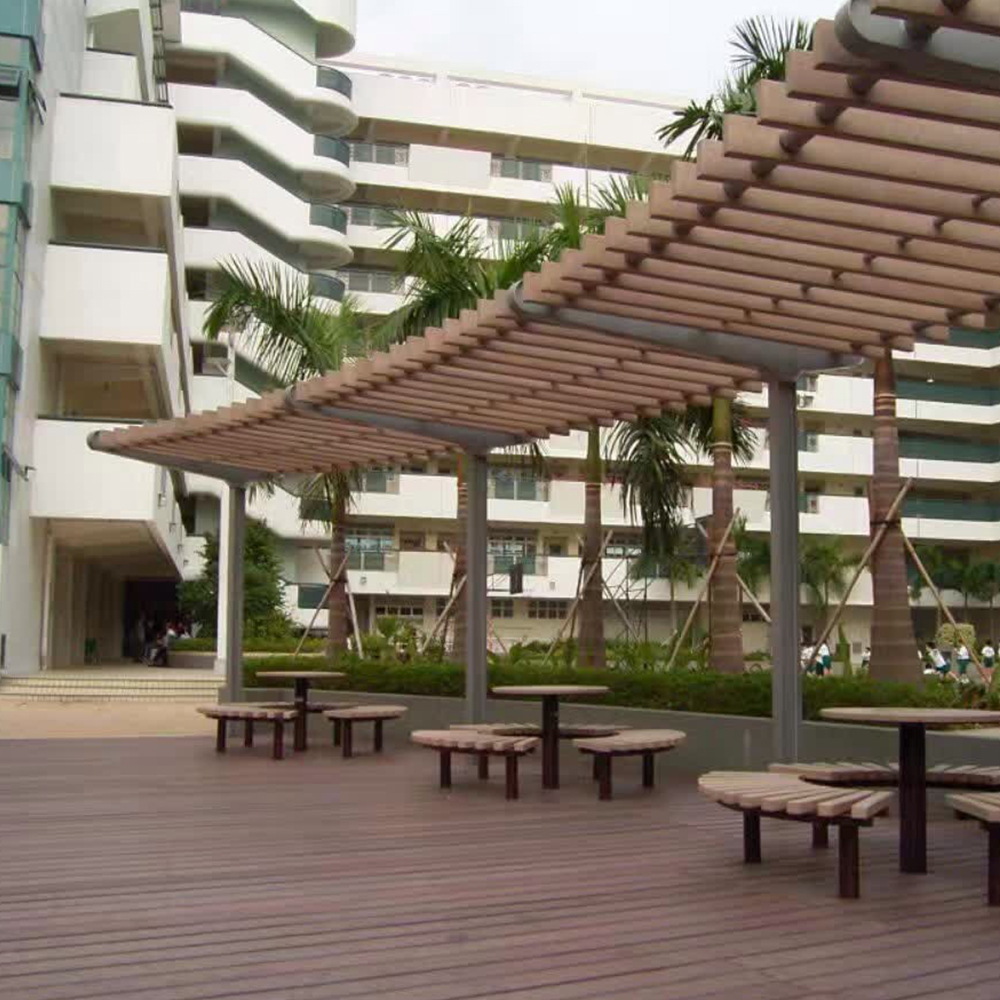
Outdoor WPC wall cladding combines wood fibers, plastic and performance additives to create a durable composite material with a natural wood-like appearance. It can be used for villas, residential buildings, hotels, resorts, commercial facades, garden structures and outdoor landscape projects.
However, choosing the right WPC wall cladding involves more than selecting a color or surface pattern. Buyers should consider the product structure, surface technology, climate conditions, installation system and project requirements.
This guide explains the main factors to consider when selecting outdoor WPC wall cladding for residential and commercial projects.
1. Determine the Application of the WPC Wall Cladding
The first step is to understand where and how the wall cladding will be used.
Outdoor WPC wall cladding can be applied to:
- Residential house exteriors
- Villas and private homes
- Hotels and resorts
- Commercial buildings
- Retail and office facades
- Garden walls
- Outdoor landscape structures
- Balconies and terraces
- Courtyards
- Public facilities
Different applications may require different levels of weather resistance, structural strength and visual performance.
For example, a small residential garden wall may focus mainly on appearance and low maintenance. A large commercial facade may require more detailed consideration of panel dimensions, installation structure, wind exposure and long-term durability.
Before selecting a product, buyers should confirm:
- Project location
- Installation area
- Total wall area
- Building type
- Local climate
- Required appearance
- Expected service life
Providing this information to the supplier can help ensure that the selected WPC wall cladding is suitable for the project.
2. Choose the Right WPC Wall Cladding Design
Outdoor WPC wall cladding is available in different profiles and surface designs.
Common options include:
- Flat WPC wall panels
- Fluted WPC wall panels
- Great Wall-style panels
- Wood-grain wall cladding
- Co-extrusion WPC wall cladding
- Decorative slatted wall panels
Flat wall panels create a clean and simple appearance and may be suitable for modern residential or commercial buildings.
Fluted and Great Wall-style panels provide stronger visual depth. Their linear design can create a modern architectural effect and add texture to large wall surfaces.
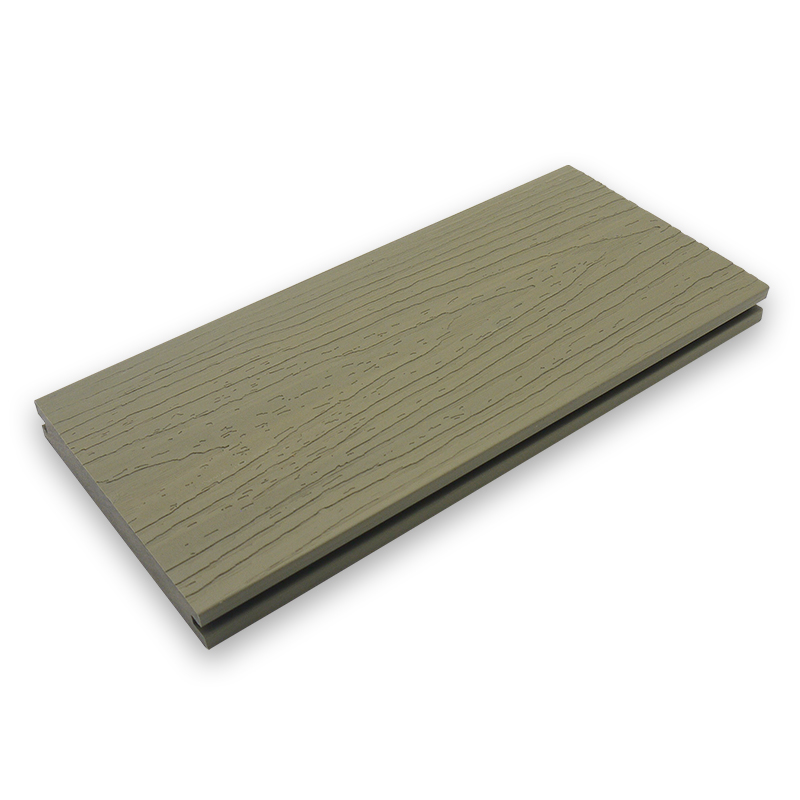
Wood-grain WPC wall cladding provides a more natural appearance and can be used when the project requires a warm, timber-inspired design.
The best profile depends on the building style, wall size and overall architectural design.
For large projects, buyers should review physical samples before confirming the final panel design.
3. Understand Traditional WPC and Co-Extrusion WPC Wall Cladding
Traditional WPC wall cladding and co-extrusion WPC wall cladding have different surface structures.
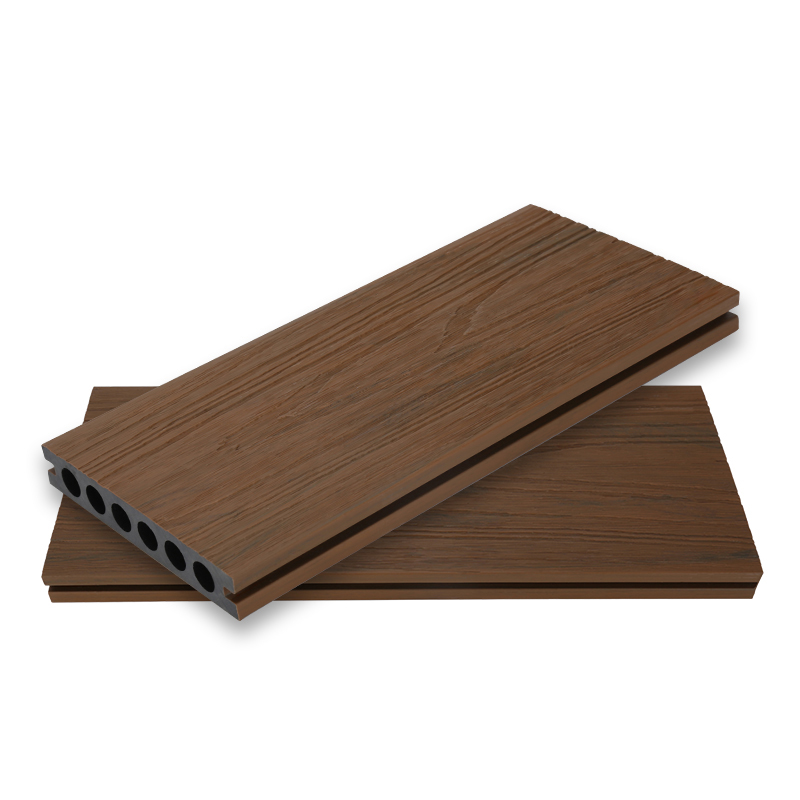
Traditional WPC wall panels are manufactured from a composite mixture of wood fibers, plastic and additives. The surface may be brushed, embossed or textured to create a wood-like appearance.
Co-extrusion WPC wall cladding includes an additional protective polymer layer around the composite core.
The protective surface may provide improved resistance to:
- Moisture
- Surface stains
- UV exposure
- Color fading
- Outdoor dirt
- Daily weathering
Traditional WPC wall cladding can provide a practical and cost-effective solution for many outdoor projects.
Co-extrusion WPC wall cladding may be more suitable for premium projects or locations with strong sunlight, high humidity, frequent rainfall or demanding appearance requirements.
The final selection should be based on the project environment, expected performance and budget.
4. Check the Wall Panel Structure and Dimensions
The structure of the WPC wall panel affects its strength, weight, installation and long-term performance.
Before purchasing, buyers should confirm:
- Panel width
- Panel thickness
- Panel length
- Internal structure
- Wall thickness
- Panel weight
- Connection design
- Installation direction
Some WPC wall panels use a hollow structure to reduce material consumption and product weight.
A properly designed hollow structure can provide a good balance between strength and weight. However, the internal design and wall thickness should be suitable for the intended application.
For large wall areas, longer panels may reduce the number of visible joints and create a cleaner appearance.
Customized lengths may also help reduce cutting work and material waste.
The selected dimensions should be compatible with the installation framework and project design.
5. Consider the Climate and Outdoor Environment
Outdoor wall cladding is exposed to changing weather conditions throughout the year.
Important environmental factors include:
- Strong sunlight
- UV exposure
- High temperatures
- Heavy rainfall
- High humidity
- Coastal conditions
- Large temperature changes
- Strong winds
Projects in areas with strong sunlight should consider UV-resistant materials and stable color performance.
For coastal projects, the complete installation system should also be evaluated. Corrosion-resistant fasteners and support materials may be required depending on local conditions.
In areas with frequent rainfall, the wall cladding system should provide suitable ventilation and drainage.
The panel surface alone cannot determine the overall performance. The installation structure, air circulation and moisture management are also important.
6. Select a Suitable Color and Surface Finish
Color affects both the visual appearance and the overall design of the building.
Popular outdoor WPC wall cladding colors include:
- Teak
- Walnut
- Coffee
- Light Grey
- Dark Grey
- Charcoal
- Black
Teak and walnut colors create a warm and natural appearance. They are often used for villas, garden buildings, hotels and residential projects.
Grey and charcoal colors provide a modern architectural style and are suitable for commercial buildings and contemporary residential designs.
When selecting a color, consider:
- Building exterior colors
- Window and door frames
- Roofing materials
- Decking and fencing colors
- Landscape design
- Local sunlight conditions
For large projects, physical samples should be reviewed under actual outdoor lighting conditions.
The appearance of a color may vary depending on sunlight, surrounding materials and viewing distance.
7. Evaluate the Installation System
A complete WPC wall cladding system may include:
- WPC wall panels
- Metal or composite battens
- Installation clips
- Screws
- Edge trims
- Corner trims
- Start and end profiles
- Ventilation and drainage components
The support structure should provide a stable and level installation surface.
Proper spacing between battens is important because it supports the wall panels and helps maintain their shape.
The installation system should also allow for normal thermal expansion and contraction.
Important installation considerations include:
- Correct batten spacing
- Adequate ventilation
- Proper drainage
- Expansion gaps
- Suitable fasteners
- Secure panel connections
- Accurate alignment
For large commercial projects, the installation design should be reviewed according to local building requirements and site conditions.
8. Consider Ventilation and Drainage
Outdoor wall cladding should not be treated as a completely sealed surface.
A properly designed cladding system may include a ventilation gap behind the panels. This space can support airflow and help manage moisture.
Ventilation and drainage are important because they can help:
- Reduce moisture accumulation
- Improve air circulation
- Support long-term wall performance
- Allow water to drain
- Reduce the risk of trapped moisture
The exact installation design depends on the building structure and local construction requirements.
For complex projects, buyers should consult qualified designers or installation professionals.
9. Compare WPC Wall Cladding with Other Exterior Materials
WPC wall cladding is often compared with natural wood, PVC and metal cladding.
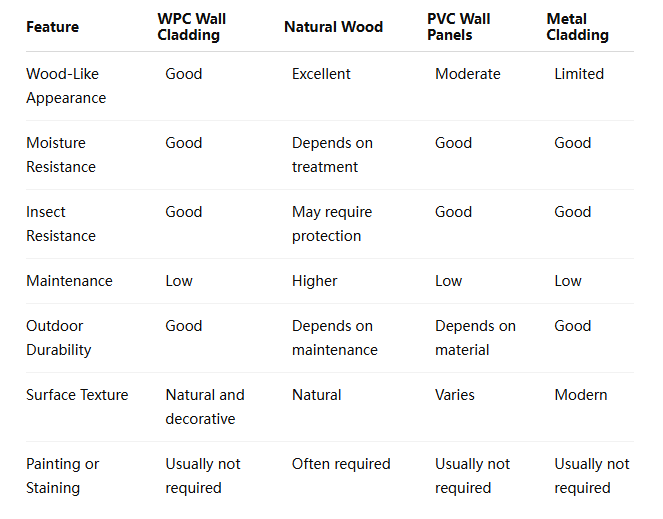
The best exterior material depends on the project design, climate, budget and maintenance expectations.
WPC wall cladding may be a suitable choice for projects that require a balance between a wood-like appearance and low-maintenance outdoor performance.
10. Review Product Quality Before Placing a Bulk Order
Before confirming a large order, buyers should request samples and review the following details:
- Surface appearance
- Color consistency
- Panel dimensions
- Panel thickness
- Surface texture
- Wood-grain quality
- Internal structure
- Edge quality
- Panel connection
- Installation accessories
- Packaging quality
For co-extrusion WPC wall cladding, buyers should also review:
- Protective surface coverage
- Surface consistency
- Bonding between the cap and core
- Resistance to common surface stains
It is also useful to request product specifications, installation instructions and available technical information.
For large commercial projects, a sample wall installation can help confirm the panel design, color and installation system before full production.
11. Confirm the Information Required for a WPC Wall Cladding Quotation
To receive an accurate quotation, buyers should provide:
- Project location
- Building type
- Installation area
- Total wall area
- Preferred panel design
- Required dimensions
- Preferred color
- Surface finish
- Installation direction
- Required accessories
- Estimated order quantity
- Target delivery time
- Destination port or delivery address
Complete project information allows the supplier to recommend suitable wall cladding products and prepare a more accurate quotation.
Why Choose UNCLEWOOD Outdoor WPC Wall Cladding?
UNCLEWOOD provides outdoor WPC wall cladding solutions for residential, commercial and landscape projects.
Our WPC wall cladding products are designed to provide:
- Natural wood-like appearance
- Low-maintenance outdoor performance
- Resistance to moisture and insects
- Multiple colors and surface finishes
- Traditional and co-extrusion options
- Decorative fluted and architectural profiles
- Compatible installation accessories
- Customized solutions for project requirements
Whether you are designing a residential exterior, hotel facade, commercial building or outdoor landscape structure, selecting the right wall cladding system is important for both appearance and long-term performance.
Contact UNCLEWOOD with your project drawings, wall dimensions, preferred design and color requirements to receive product recommendations and a customized quotation.
Frequently Asked Questions
Is outdoor WPC wall cladding waterproof?
Outdoor WPC wall cladding provides good resistance to moisture. However, the complete wall system should be designed with proper ventilation, drainage and installation details.
Can WPC wall cladding be installed in rainy or humid areas?
WPC wall cladding can be used in humid and rainy environments when the product and installation system are selected correctly. Proper drainage and ventilation are important.
Does WPC wall cladding fade in sunlight?
Outdoor WPC wall cladding is designed with UV-resistant materials. Some natural weathering may occur over time depending on the product formulation, color and local environmental conditions.
What is the difference between traditional and co-extrusion WPC wall cladding?
Traditional WPC wall cladding has an exposed composite surface. Co-extrusion WPC wall cladding includes an additional protective surface layer that may improve resistance to moisture, stains, UV exposure and color fading.
Does WPC wall cladding require painting?
WPC wall cladding generally does not require regular painting or staining like natural wood. Routine cleaning is usually sufficient.
Can WPC wall cladding be customized?
Depending on the project requirements and order quantity, customization may be available for panel length, color, surface finish and product configuration.
Can WPC wall cladding be installed vertically or horizontally?
Many WPC wall cladding products can be installed vertically or horizontally, depending on the panel design and installation system. Buyers should follow the supplier’s installation recommendations.