Large-Scale WPC Fence Installation for a Residential Community in Australia
How Composite Fencing Improved Privacy, Reduced Maintenance Costs, and Enhanced Community Appearance
Introduction
As residential developments continue to expand across Australia, developers are increasingly seeking building materials that can withstand harsh weather conditions while maintaining long-term aesthetic appeal. Traditional timber fencing has been a popular choice for decades, but issues such as fading, warping, termite damage, and ongoing maintenance costs have prompted many property developers to explore alternative solutions.
One recent residential community project in Australia demonstrated how Wood Plastic Composite (WPC) fencing can provide a durable, attractive, and cost-effective alternative to conventional timber fencing. This case study examines the project requirements, challenges, installation process, and long-term benefits achieved through the use of composite fencing systems.
Project Background
The project involved a newly developed residential community located in a coastal suburban area of Australia. The development consisted of more than 200 detached homes, landscaped public areas, pedestrian walkways, and recreational spaces.
The developer required a fencing solution capable of providing privacy between properties while complementing the modern architectural design of the community. Since the project was located in an area exposed to intense sunlight, seasonal storms, and coastal humidity, the fencing material needed to offer excellent weather resistance and minimal maintenance requirements.
The total fencing requirement exceeded 4,500 linear meters, making long-term durability and lifecycle costs critical considerations during material selection.
Challenges Faced by the Developer
The developer initially considered traditional hardwood fencing, which remains common in many Australian residential projects. However, several concerns quickly emerged during the planning stage.
Firstly, timber fences require regular staining, sealing, and repainting to maintain their appearance. With hundreds of homes involved, maintenance expenses would become substantial over time.
Secondly, Australia's climate presents significant challenges for wood products. Prolonged UV exposure often causes timber to fade and crack, while moisture can lead to swelling, warping, and structural instability.
Additionally, termite activity is a major concern in many Australian regions. Even treated timber remains vulnerable over the long term, creating potential replacement costs and homeowner dissatisfaction.
The developer therefore sought a fencing solution that could maintain its appearance and structural integrity for many years with minimal intervention.
Why Composite Fencing Was Selected
After evaluating multiple options, including timber, aluminum, and vinyl fencing systems, the project team selected co-extrusion WPC fencing.
The composite fence panels offered several advantages that aligned closely with the project's objectives.
The co-extrusion protective layer provided enhanced resistance against UV radiation, moisture penetration, stains, and surface scratches. Unlike conventional wood, the composite material would not splinter, rot, or become susceptible to termite attacks.
From a design perspective, the fence featured a contemporary appearance that closely resembled natural timber while delivering a more uniform and premium finish throughout the community.
Most importantly, the projected maintenance costs over a twenty-year period were significantly lower compared to traditional timber fencing systems.
Product Specifications
For this project, the selected fencing system featured:
- Co-extrusion WPC fence panels
- Aluminum reinforced structural posts
- UV-resistant protective cap layer
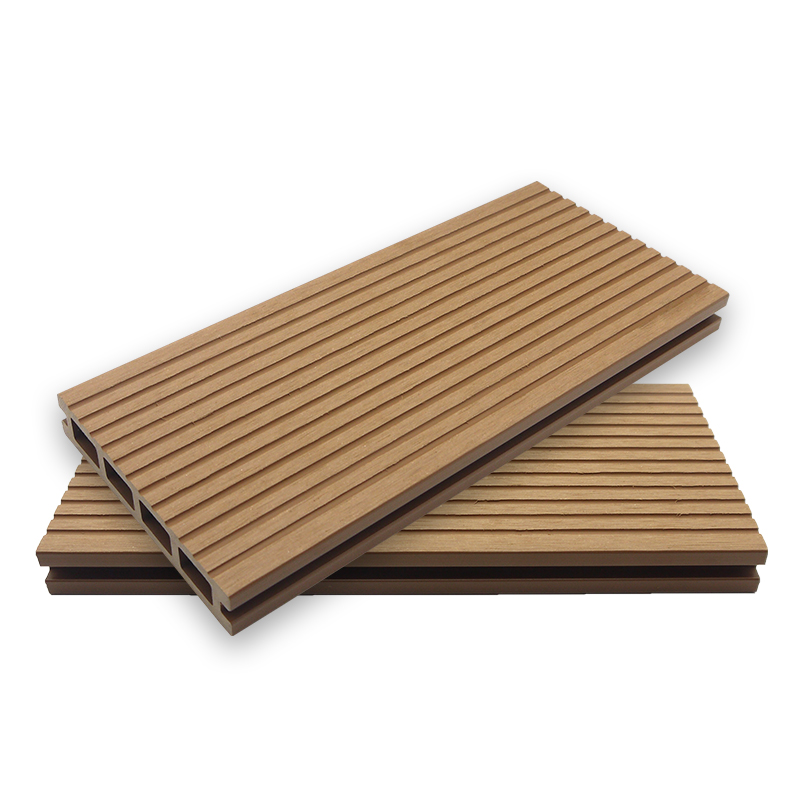
- Modern wood-grain surface finish
- Hidden fastening system
- Wind-resistant engineering design
- Low-maintenance construction
The chosen color was a modern teak tone that complemented the exterior color schemes used throughout the residential development.
Installation Process
One of the key benefits of the composite fencing system was its efficient installation process.
Prior to installation, contractors completed a detailed site survey to establish fence alignments and ensure consistent post spacing throughout the community.
Galvanized steel foundations were prepared for all structural posts, providing long-term stability and resistance to ground movement.
Once the support structure was completed, composite fence panels were installed using a modular interlocking system. This approach allowed installation crews to maintain consistent quality while reducing labor time compared to traditional timber construction.
Despite the large project scale, the entire fencing installation was completed within the planned construction schedule, helping the developer meet community handover deadlines.
Project Results
Following project completion, the composite fencing system delivered significant benefits to both the developer and future homeowners.
The community immediately achieved a modern and cohesive appearance, enhancing overall property values and curb appeal.
Homeowners appreciated the enhanced privacy provided by the solid-panel design, particularly in backyard areas and shared boundaries.
The durable construction also reduced concerns regarding future repairs, painting, or replacement, providing long-term confidence for property owners.
Several months after installation, inspections confirmed that the fencing maintained its original appearance despite exposure to strong sunlight, coastal humidity, and seasonal weather fluctuations.
Long-Term Cost Analysis
Although the initial investment for composite fencing was slightly higher than standard timber fencing, the lifecycle cost analysis revealed substantial savings.
Traditional timber fences typically require periodic maintenance, including:
- Painting or staining every few years
- Replacement of damaged boards
- Repairs caused by termite activity
- Ongoing labor expenses
By contrast, the WPC fencing system requires only occasional cleaning with water and mild detergent.
Over a projected service life exceeding twenty years, the developer estimated maintenance savings of more than 40 percent compared to conventional timber fencing solutions.
This long-term financial advantage was one of the primary reasons the project team ultimately selected composite fencing.
Environmental Benefits
Sustainability also played an important role in material selection.
The composite fencing system incorporated recycled wood fibers and recycled plastics, helping reduce demand for natural timber resources.
Because the fence requires fewer maintenance chemicals such as paints, stains, and preservatives throughout its lifespan, it contributes to a lower environmental footprint compared to traditional wood fencing.
For developers seeking environmentally responsible construction materials, composite fencing represents an effective balance between performance and sustainability.
Lessons Learned
The success of this residential community project highlighted several key considerations for future developments.
Developers should evaluate fencing materials based not only on initial purchase costs but also on long-term maintenance requirements and expected service life.
Projects located in coastal or high-UV environments particularly benefit from the enhanced weather resistance offered by co-extrusion composite fencing systems.
Furthermore, selecting a modular fencing design can significantly improve installation efficiency and consistency across large-scale developments.
Conclusion
This Australian residential community project demonstrates why composite fencing is becoming an increasingly popular choice among developers, architects, and contractors.
By combining attractive aesthetics, superior durability, low maintenance requirements, and long-term cost savings, co-extrusion WPC fencing successfully addressed the challenges associated with traditional timber fencing.
As residential construction continues to evolve, composite fencing is expected to play an increasingly important role in creating sustainable, attractive, and maintenance-free communities across Australia and other demanding outdoor environments worldwide.