WPC Fence Solutions for Commercial & Public Areas in Australia
Why Commercial and Public Projects in Australia Are Moving Toward WPC Fencing
Across Australia, commercial and public developments are facing stricter durability, safety, and sustainability requirements. From school perimeters in Queensland to coastal public parks in Western Australia, traditional timber fencing is increasingly being replaced by WPC (Wood Plastic Composite) fencing systems.
Unlike conventional timber fences that crack, fade, and require constant repainting, WPC fencing offers a long-term structural solution. For government-funded infrastructure and public facilities, lifecycle cost matters more than initial price. Maintenance budgets are limited. Durability is non-negotiable.
This is exactly where modern composite fence systems outperform traditional materials.
What Makes WPC Fence Ideal for Public & Commercial Applications?
WPC fencing combines recycled wood fibers and high-density polymers, creating a material that performs exceptionally well in harsh outdoor conditions — especially relevant in Australian climates.
For public projects, three performance factors are critical:
Structural Stability in Extreme Weather
Australian environments range from coastal salt exposure in Western Australia to intense UV radiation in Queensland and Victoria. WPC fence panels resist:
- Salt corrosion
- Termite damage
- Rot and mold
- UV fading
Unlike timber, WPC does not splinter or warp significantly over time, which reduces safety risks in public spaces.
Low Maintenance for Government Budgets
Public facilities require long-term cost predictability. WPC fencing does not require:
- Annual staining
- Repainting
- Anti-termite treatment
Routine cleaning with water is typically sufficient. Over 10–15 years, this drastically reduces operational expenses compared to traditional timber fencing.
Sustainability Compliance
Sustainable building practices are becoming standard in Australian public procurement processes. WPC fencing systems support green building initiatives due to:
- Recycled material composition
- Extended lifespan
- Reduced chemical treatments
For councils and public developers, this aligns with broader ESG goals and environmental accountability.
Case Example: School Perimeter Upgrade in Queensland
In 2024, a regional public school in Queensland replaced 480 meters of aging timber fencing surrounding its sports field and pedestrian boundary areas.
The previous timber fence required repainting every 18 months due to UV exposure and moisture damage during rainy seasons. Splintering panels also created safety concerns for students.
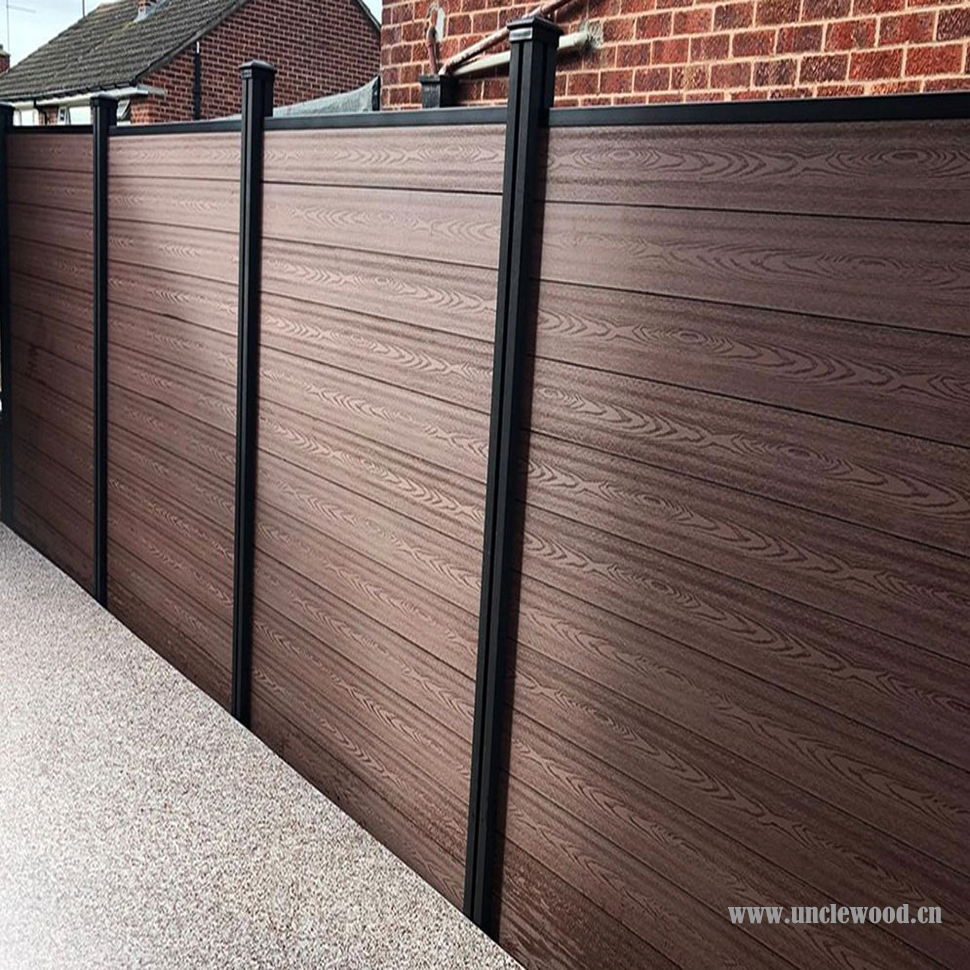
The renovation specified solid-profile WPC fence panels in a natural teak tone, installed with aluminum structural posts for enhanced wind resistance.
Results after 12 months:
- No visible fading under strong Queensland sun
- Zero structural movement despite heavy rainfall
- No maintenance costs beyond routine inspection
For educational environments, safety, durability, and clean aesthetics are equally important. WPC fencing provided a long-term solution without increasing annual budget allocation.
Commercial Application: Public Park Privacy Fencing in Western Australia
A coastal public park redevelopment project in Western Australia required privacy fencing around a newly constructed restroom and utility facility.
Salt air corrosion had previously destroyed powder-coated steel fencing within 5 years.
The new project adopted co-extruded WPC fence panels featuring a protective polymer cap layer. This added surface protection significantly improved resistance to salt spray and moisture penetration.
Three key outcomes:
- Improved visual uniformity across the park landscape
- Reduced vandalism impact due to stronger panel structure
- No corrosion-related degradation
For coastal councils, this type of composite fencing reduces long-term replacement cycles.
Design Flexibility for Architects & Planners
Modern WPC fence systems are no longer limited to simple flat panels. For commercial and public projects, they can be customized in:
- Horizontal or vertical slat designs
- Privacy or semi-open decorative patterns
- Integrated gate systems
- Matching balustrade combinations
This is especially valuable when coordinating fencing with:
- WPC decking walkways
- Outdoor seating areas
- Public building wall cladding
Architectural consistency enhances overall project value and urban aesthetics.
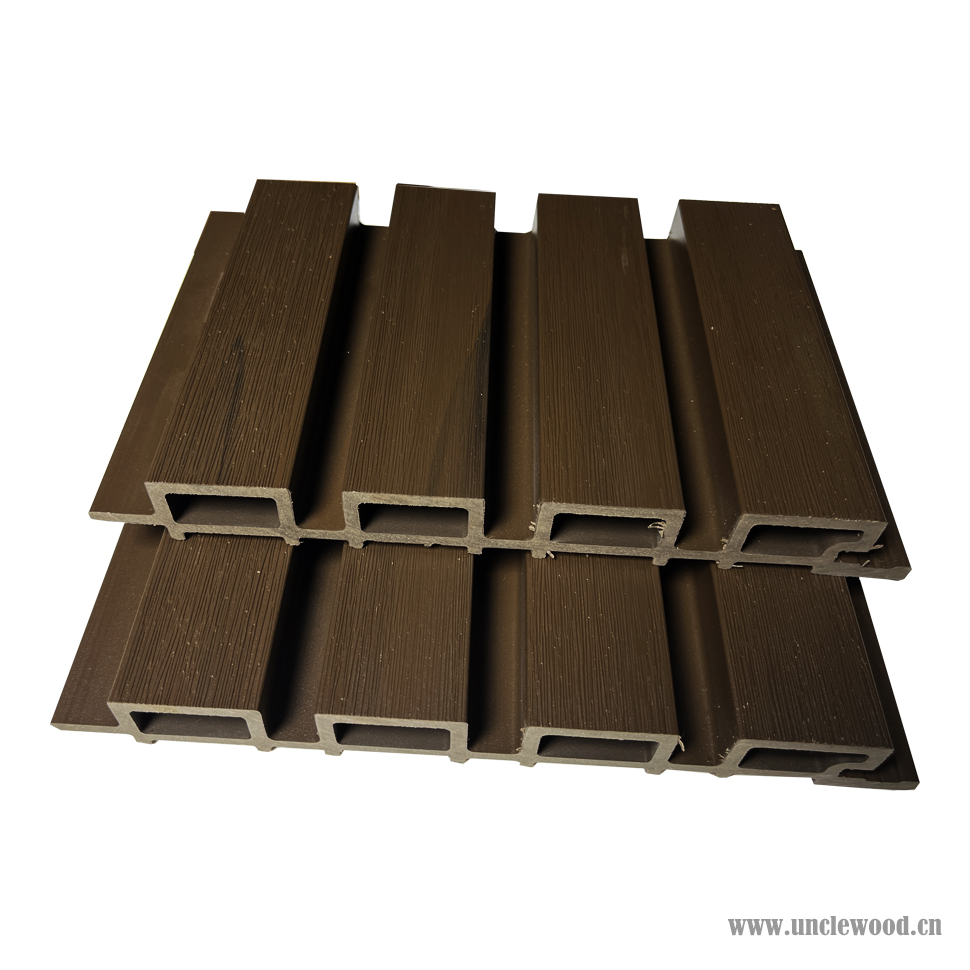
Solid vs Hollow Fence Panels: Which Is Better for Public Projects?
For government and high-traffic areas, solid-profile WPC fence panels are typically recommended.
Solid panels provide:
- Higher impact resistance
- Better wind-load performance
- Greater structural strength
Hollow systems may be appropriate for residential or light commercial projects, but for schools, parks, and transport facilities, solid composite fencing ensures better long-term performance.
Comparing WPC Fence vs Traditional Timber Fence in Public Use
In public sector evaluation processes, fencing materials are usually assessed across lifecycle performance.
Timber fencing:
- Lower initial cost
- High maintenance requirement
- Shorter lifespan (5–8 years in harsh climates)
WPC fencing:
- Moderate initial investment
- Minimal maintenance
- Lifespan exceeding 15–20 years
- Stable performance in coastal and high-UV environments
For Australian public procurement, long-term value increasingly outweighs short-term savings.
Installation Considerations for Australian Projects
Proper installation is critical to ensure structural reliability.
Key recommendations include:
- Reinforced post foundations for high-wind regions
- Expansion gap allowance for temperature variation
- Stainless steel or coated fasteners in coastal zones
Professional installation ensures compliance with local building standards and wind load requirements.
Why More Australian Public Projects Are Specifying WPC Fencing
From schools in Victoria to coastal developments in Western Australia, WPC fencing is becoming a standard specification due to:
- Reduced lifecycle cost
- Improved public safety
- Long-term aesthetic stability
- Sustainable material composition
As government infrastructure investment continues, composite materials are gaining preference in fencing, decking, wall panels, and balustrade systems.
Conclusion
For commercial and public area developments in Australia, WPC fence systems provide a balanced solution combining durability, safety, and sustainability.
Whether for school perimeters, government office compounds, public parks, or coastal facilities, composite fencing delivers consistent performance where traditional materials fall short.
As lifecycle budgeting and environmental accountability become central to public procurement, WPC fencing is no longer an alternative — it is increasingly the preferred standard.