Co-Extrusion Decking vs Traditional Wood Decking Which Material Performs Better Long Term
A Deep Comparison of Durability Maintenance Costs Sustainability and Outdoor Performance
For decades, traditional timber decking dominated residential and commercial outdoor construction projects across Europe, North America, and Australia. Natural wood has always been valued for its warm appearance and classic texture. However, as outdoor construction standards evolve and maintenance expectations increase, many developers, contractors, and homeowners are now comparing timber decking with modern co-extrusion composite decking to determine which material delivers better long-term performance.
At first glance, traditional wood may appear to offer a more natural visual appeal. Hardwood species such as teak, cedar, and merbau have historically been associated with luxury outdoor design. However, maintaining this appearance requires continuous effort. Timber decking is highly sensitive to environmental conditions, particularly moisture, ultraviolet exposure, and temperature fluctuations. Without regular maintenance, wood surfaces gradually lose color stability, develop cracks, absorb moisture, and become vulnerable to mold growth and insect damage.
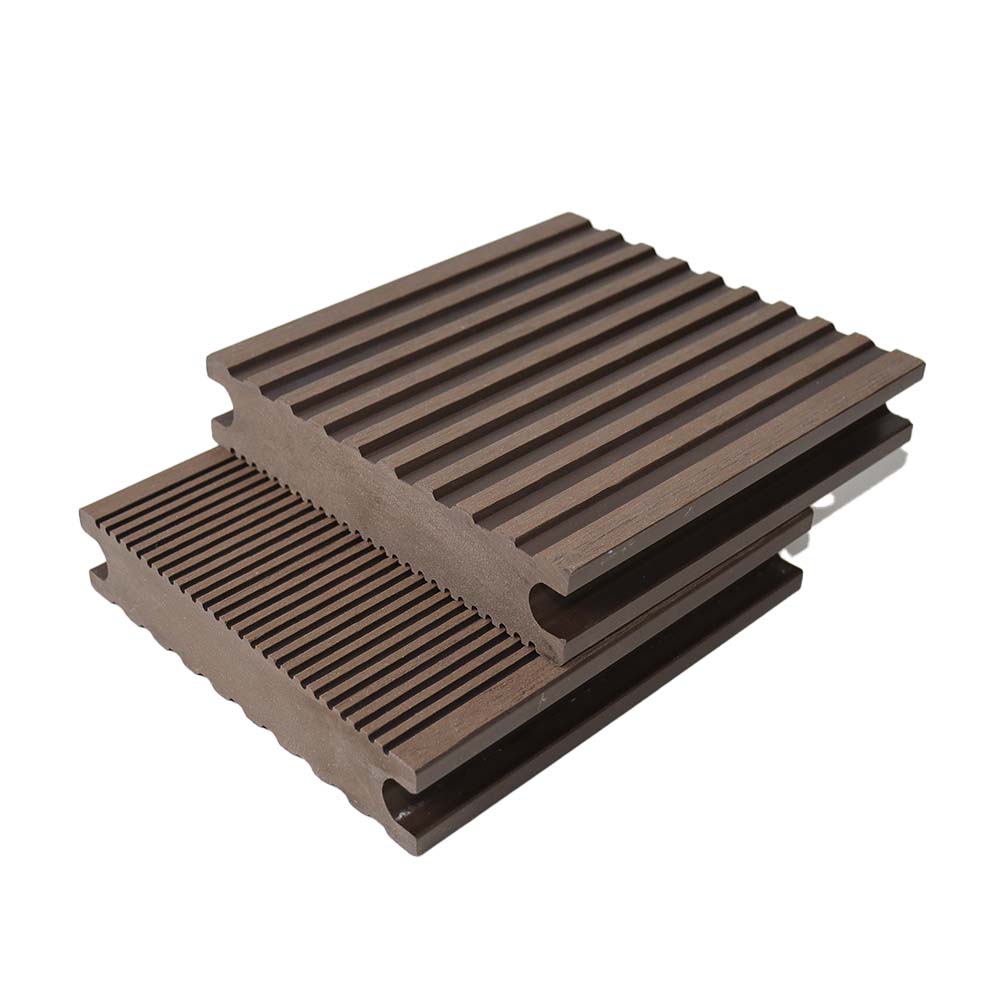
In contrast, co-extrusion composite decking is engineered specifically to address these long-standing weaknesses. Modern capped composite boards use a protective polymer shell that surrounds the composite core, creating a highly durable barrier against water penetration, UV radiation, stains, and surface scratches. This technology significantly reduces the common problems associated with traditional timber installations.
Maintenance represents one of the largest differences between the two materials. Wooden decks typically require periodic sanding, sealing, painting, or oil treatment to preserve appearance and structural integrity. In many climates, especially humid or high-UV regions, these maintenance cycles may be necessary every one to two years. Over time, labor costs and material expenses can become substantial, particularly for commercial properties with large outdoor surfaces.
Composite decking dramatically reduces these ongoing maintenance demands. Most co-extrusion systems only require occasional cleaning with water and mild detergent. For hotels, resorts, restaurants, schools, and public infrastructure projects, this reduction in maintenance not only lowers operational costs but also minimizes service interruptions caused by repair work.
Durability under extreme weather conditions is another critical consideration. Natural wood expands and contracts significantly in response to moisture and temperature changes. Over time, repeated movement may loosen fasteners, distort board alignment, and create structural instability. Composite decking systems are designed with more stable dimensional performance, helping reduce deformation in challenging climates.
Safety performance has also become increasingly important in modern construction projects. Aging timber surfaces often produce splinters and become slippery when exposed to rain or poolside moisture. Co-extrusion decking typically incorporates anti-slip textures while eliminating splintering risks, making it especially suitable for schools, commercial walkways, swimming pool areas, and public recreation spaces.
Environmental sustainability is another factor influencing purchasing decisions worldwide. Large-scale timber harvesting continues to raise environmental concerns in many regions. Composite decking manufactured using recycled plastics and reclaimed wood fibers offers a more resource-efficient alternative while reducing dependence on slow-growing hardwood forests.
Although traditional timber may still appeal to some buyers because of its initial lower cost or natural appearance, the long-term economic comparison increasingly favors capped composite decking. When maintenance expenses, replacement frequency, labor costs, and service lifespan are considered together, many developers conclude that co-extrusion decking provides superior overall value over the lifetime of a project.
As global outdoor construction trends continue shifting toward low-maintenance, sustainable, and performance-driven materials, co-extrusion composite decking is rapidly becoming the preferred solution for both residential and large-scale commercial applications.