How to Choose the Right WPC Decking for Your Project | Buyer’s Guide
How to Choose the Right WPC Decking for Your Project
Choosing the right outdoor decking material is one of the most critical decisions in any landscaping or construction project. For homeowners, contractors, and project developers, WPC decking (Wood Plastic Composite decking) has become a preferred alternative to traditional wood due to its durability, low maintenance, and consistent performance in different climates.
However, not all WPC decking boards are the same. Differences in structure, surface treatment, material formulation, and application scenarios can significantly affect long-term performance. This guide explains how to choose the right WPC decking for your project based on real engineering considerations rather than marketing claims.
Understanding the Purpose of Your Project
The first step in choosing WPC decking is clearly defining how and where it will be used. Residential gardens, commercial terraces, public walkways, and coastal projects all impose different requirements on decking materials.
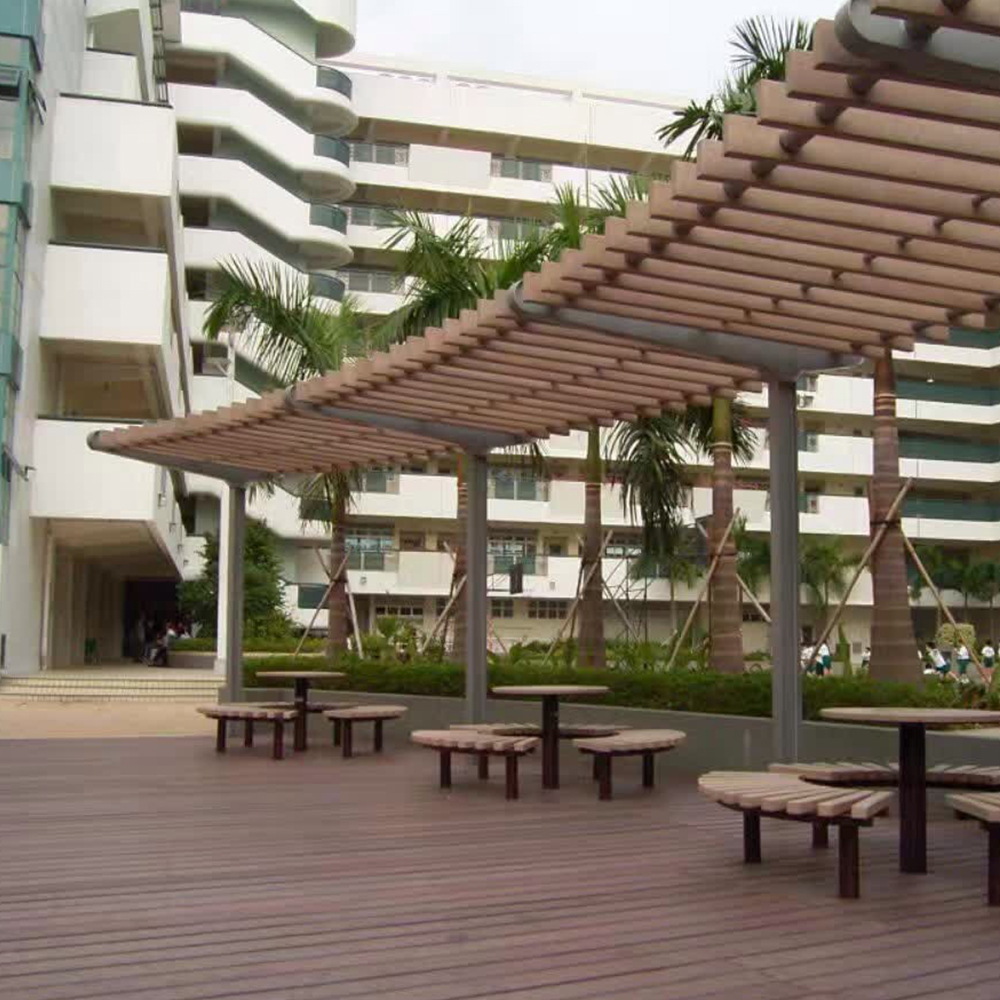
For private residential use, aesthetics and comfort are often the main concerns. Homeowners usually prefer decking with a natural wood appearance, barefoot-friendly surfaces, and moderate load capacity. In contrast, commercial and public projects such as parks, schools, hotels, and waterfront promenades prioritize structural strength, slip resistance, color stability, and long service life under heavy foot traffic.
Climate also plays a decisive role. Projects in Australia, the Middle East, and Southern Europe require decking with strong UV resistance and heat stability, while Northern Europe and coastal areas demand excellent moisture resistance and dimensional stability.
Solid vs Hollow WPC Decking: Structural Considerations
One of the most common questions buyers ask is whether solid or hollow WPC decking is the better choice.
Solid WPC decking is typically used in high-load or high-traffic applications. Because of its dense structure, it provides higher bending strength and better long-term stability. This makes it suitable for public walkways, commercial terraces, schools, and government projects where safety standards are strict and usage intensity is high.
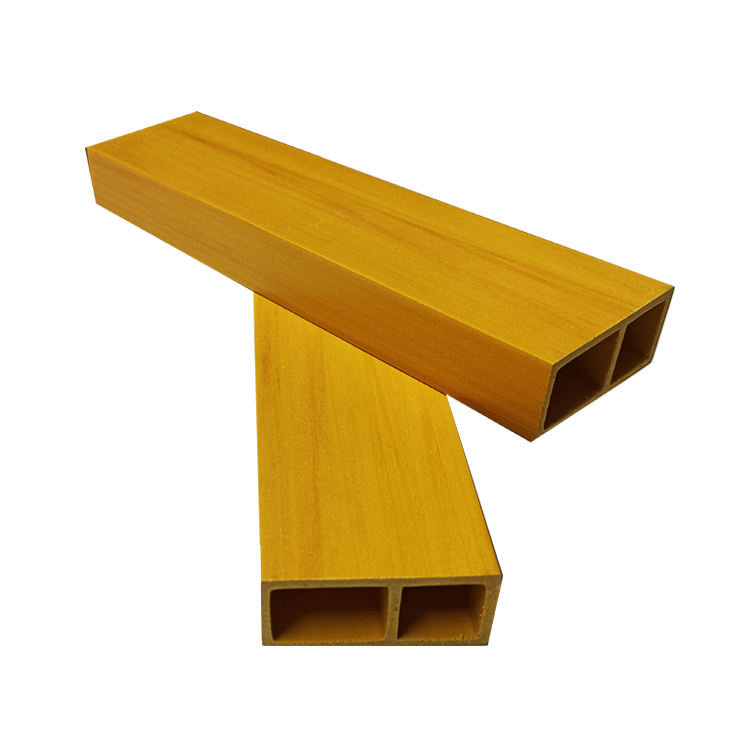
Hollow WPC decking, on the other hand, is lighter and more cost-effective. It is often used in residential gardens, balconies, and private patios where loads are lower and budgets are more controlled. When properly installed with the correct joist spacing, hollow decking can still offer excellent performance for many years.
In engineering practice, solid boards are generally recommended for projects with unknown or variable loads, while hollow boards are preferred when weight reduction and cost efficiency are priorities.
Surface Treatment: More Than Just Appearance
Surface treatment directly affects both the visual appeal and functional performance of WPC decking.
Smooth surface decking offers a clean and modern look and is easy to clean. It is commonly used in covered or semi-covered areas where abrasion and dirt accumulation are limited. However, in open outdoor environments, smooth surfaces may show scratches more easily over time.
Embossed or wood-grain textured decking is designed to replicate the look and feel of natural wood. More importantly, deep embossed surfaces provide enhanced slip resistance, making them suitable for pool surroundings, walkways, and rainy regions.
Co-extruded WPC decking represents a more advanced solution. With a protective polymer layer wrapped around the core, co-extruded boards offer superior resistance to fading, staining, moisture, and surface wear. In commercial projects and premium residential applications, co-extruded decking is often chosen to reduce long-term maintenance costs and preserve appearance over time.
Color Selection and Environmental Performance
Color is not only an aesthetic choice but also a functional one. Darker colors tend to absorb more heat, which may be uncomfortable in regions with intense sunlight. Lighter tones reflect heat better and maintain a cooler surface temperature.
In many European and Australian projects, natural wood-inspired colors such as teak, walnut, coffee, and grey are preferred for their compatibility with modern architecture and outdoor landscapes. It is important to select colors with proven UV stability to minimize fading, especially for uncovered installations.
High-quality WPC decking should maintain consistent color performance across different production batches, which is particularly important for large-scale projects and phased installations.
Installation System and Substructure Compatibility
Even the best decking board will fail if the installation system is not properly designed. Choosing WPC decking should always go hand in hand with selecting a compatible substructure and fastening system.
Aluminum or galvanized steel joists are often recommended for commercial and long-span projects due to their stability and resistance to moisture. For residential use, WPC or treated wood joists may also be suitable if properly spaced and ventilated.
Hidden fastening systems are widely used in modern decking installations, as they create a clean surface appearance and allow for controlled expansion and contraction. Proper expansion gaps and drainage design are essential to prevent deformation and water accumulation.
Maintenance Expectations and Lifecycle Cost
One of the key advantages of WPC decking is its low maintenance requirement. Unlike traditional wood, WPC does not require regular painting, oiling, or sealing. Routine cleaning with water and mild detergent is usually sufficient to maintain appearance.
From a lifecycle cost perspective, WPC decking often proves more economical than natural wood, especially in commercial and public projects. Reduced maintenance labor, longer service life, and fewer replacement needs contribute to lower total ownership costs over time.
For buyers comparing initial price only, this long-term value is often overlooked. In professional projects, lifecycle performance is usually more important than upfront material cost.
Choosing the Right Supplier Matters
Beyond product specifications, selecting a reliable WPC decking supplier is crucial. Consistent material formulation, quality control, and project experience directly affect product performance and customer satisfaction.
Suppliers with proven experience in international projects, especially in Europe, Australia, and public-sector developments, are better equipped to provide stable quality, technical support, and application guidance.
Requesting real project references, technical data sheets, and installation recommendations is a standard practice in professional procurement processes.
Final Thoughts
Choosing the right WPC decking is not about selecting the most expensive product, but about matching the right material to the right application. By considering project purpose, structural requirements, surface treatment, climate conditions, installation system, and long-term maintenance, buyers can make informed decisions that ensure performance, safety, and visual appeal for years to come.
For residential, commercial, and public projects alike, well-selected WPC decking offers a durable, sustainable, and cost-effective outdoor flooring solution.